The Diploma Programme (DP) provides a challenging, internationally focused, broad and balanced educational experience for students aged 16 to 19. It is a rigorous pre-university course of study for a broad-based two-year course that aims to encourage students to be knowledgeable and inquiring, but also caring and compassionate.
Students are required to study six subjects from different disciplines and focus on the curriculum core. The programme is designed to prepare students with the academic skills needed for university study, and further education in their selected profession in addition to developing the values and skills needed to be lifelong learners.
The International Baccalaureate (IB) Diploma Programme (DP) is a two-year pre-university programme designed for students aged 16–19. It is known for its rigorous academic framework, emphasis on holistic education, and focus on developing internationally minded, critical thinkers.
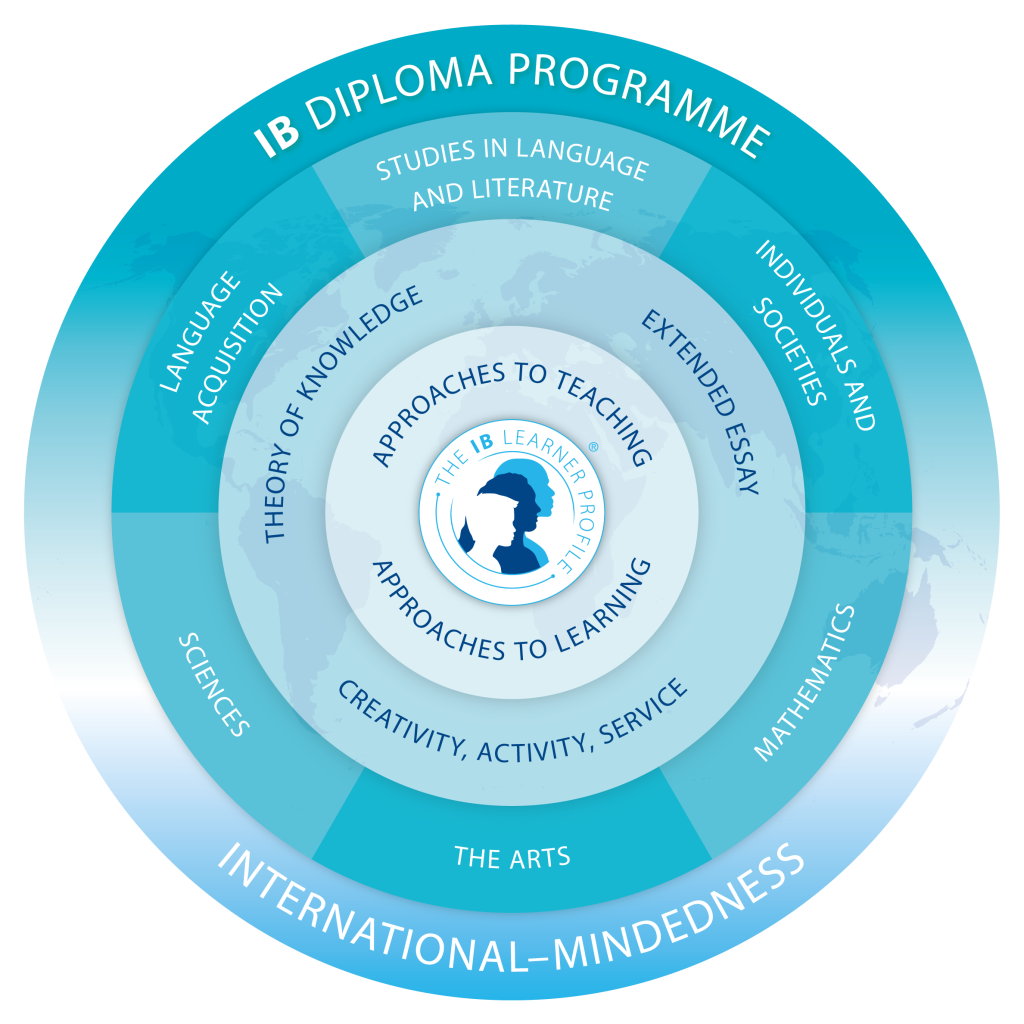
The IB DP curriculum is structured into six subject groups and three core components, ensuring a well-balanced education that prepares students for university and beyond. See below in the DP model;
Outside of the Core, there are six grouped areas of academic study:
Beyond the subject groups, IB DP students complete three essential core elements:
The ToK course provides students with an opportunity to explore and reflect on the nature of knowledge and the process of knowing. In ToK, students reflect on the knowledge, beliefs and opinions that they have built up from their years of academic studies and their lives outside the classroom. Tok encourages students to become more aware of their own perspectives and the perspectives of others.
The Extended Essay offers the opportunity to conduct independent investigation in an area of interest, encompassing research and writing skills of a 4000 word academic essay.
CAS involves students in a range of activities alongside their academic studies which will involve them in activities and programmes in three strands, including Arts and other experiences which enable them to think creatively, physical activities, leading to a healthier lifestyle and service activities, which in voluntary work, helping those in a wider community in need.
Certificate Candidates are students who choose to pursue individual IB subjects rather than the full diploma. This pathway allows students to focus on their strengths and interests by selecting specific subjects, either at Standard Level (SL) or Higher Level (HL), without the additional core requirements of the full diploma. Successful completion of individual courses leads to the award of an IB Certificate in each subject, which can be recognized by universities and employers worldwide.
The International Baccalaureate (IB) Continuum ensures a seamless transition for students progressing from the Middle Years Programme (MYP) to the Diploma Programme (DP) by building on the skills, knowledge, and approaches to learning developed in the MYP. This is achieved through ensuring the following;
The benefits of the IB Diploma Programme can be categorised into two;
INTERNAL ASSESSMENTS |
Oral assessments in languages (English, and Arabic) |
Investigations/reports/commentaries in all subjects |
TOK Exhibition and commentary |
EXTERNAL ASSESSMENTS (WRITTEN EXAMS) |
|
Given at the end of the Year 2 (grade -12/May Session) and this includes |
|
Structured problems | Short-response questions |
Data -response questions | Text-response questions |
Extended essay, TOK essay | Multiple-choice questions (Physics, chemistry, & Biology) |
Visual Arts comparative study, process portfolio | HL Essay in English |
Case-study questions |
|